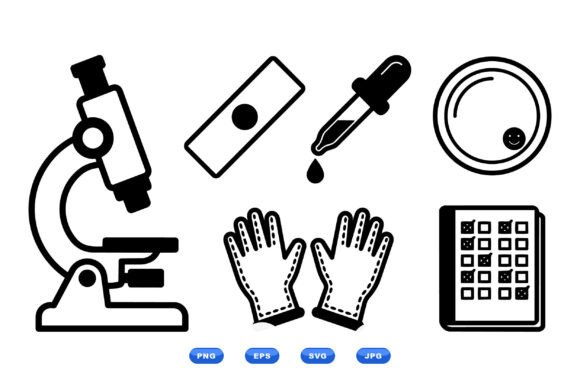
Microscope Biology Vector Icons
A Designer’s First Glance: Clean, Curious, and Quietly Confident
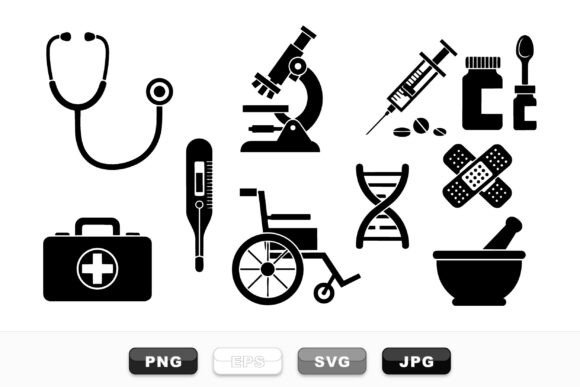
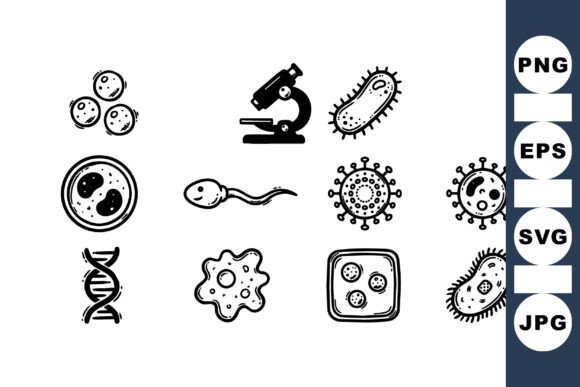
When I opened Microscope Biology Vector Icons, my first thought wasn’t “science lesson”—it was “this feels like a quiet conversation with a curious mind.” The black-and-white hand-drawn style isn’t fussy or overly technical. It’s precise without being clinical, playful without drifting into cartoon territory. Each icon—microscope, DNA strand, amoeba, sperm, bacteria, virus, cell—sits with gentle spacing and consistent line weight. There’s breathing room. That matters. A lot.
I immediately pictured it on a linen tea towel for a science teacher’s birthday gift—or stitched onto the chest of a soft organic cotton baby onesie for a pediatrician’s newborn. Not as a loud statement, but as a thoughtful detail. The kind that makes someone pause, smile, and say, “Oh—I *get* that.”
How It Stitches: Where Clarity Meets Craft
In real embroidery use, Microscope Biology Vector Icons shines where subtlety and recognition intersect. On a medium-weight cotton tote bag? Excellent. The clean lines translate well to satin stitch outlines and light fill-stitch interiors—no muddy corners or thread nesting. On a relaxed-fit sweatshirt? Still strong, especially if you keep the design compact (think 3–4 inches wide) and use a medium tear-away stabilizer. The hand-drawn quality holds up beautifully in running stitch accents—like tracing the spiral of the DNA strand or the curve of the microscope eyepiece.
For custom apparel—especially t-shirts and caps—the layout flexibility is a win. You can isolate one icon (say, just the microscope) for a minimalist chest logo, or group three or four into a small cluster for a sleeve or pocket edge. As an embroidered patch? Ideal. The defined edges mean clean cutaway backing and crisp borders after trimming. And because it’s vector-based, scaling down for a tiny apron pocket or up for a nursery pillow cover stays sharp—no pixelation, no guesswork.
Where to Pause—and Why
That said, not every surface welcomes this design equally. On highly textured fabrics—like bouclé knit or heavy terry cloth—the fine linework can blur visually. Tiny details (the individual flagella on the sperm icon, or the segmented outline of the virus) may soften or disappear unless you adjust stitch density carefully. Same goes for stretchy fabrics: without proper stabilization and hooping technique, those delicate curves can distort.
Dark fabric demands attention too. Since the design is black-and-white vector art—not pre-digitized embroidery—you’ll need to choose high-contrast thread colors (e.g., bright white or heather grey on navy) and test stitch density so fill areas don’t look heavy or dull. And on curved surfaces like caps or baby beanies? Stick to the central, most symmetrical icons (microscope, cell) rather than elongated ones (DNA strand, amoeba)—they digitize and stitch more predictably.
What This Means for Your Handmade Product
Microscope Biology Vector Icons elevates perceived value—not by shouting, but by signaling care. Customers browsing your Etsy shop or boutique shelf respond to intentionality. A sweatshirt with this design doesn’t feel mass-produced; it feels chosen. That builds trust. It also supports brand consistency if you’re building a line around education, wellness, or mindful science—think lab-themed kitchen towels, nursery decor bundles, or graduation gifts for biology majors.
For holiday embroidery or personalized gifts? It’s quietly versatile. Pair it with a simple serif font for a “Future Scientist” tag on a baby blanket—or combine it with subtle cross-stitch motifs for a vintage-inspired printable mockup. Its educational warmth makes it giftable year-round, not just during back-to-school season.
Practical Notes Every Embroidery Designer Should Keep Handy
- Always test first: Stitch Microscope Biology Vector Icons on scrap fabric matching your final project’s weight and texture—even if it’s just one icon.
- Check contrast early: View your thread color choices against both light and dark fabric backgrounds before digitizing or stitching.
- Review stitch density: Especially in clustered icons, avoid overfilling small shapes—lighter fill stitches preserve the hand-drawn delicacy.
- Hoop size matters: If using multiple icons together, confirm your hoop accommodates the full layout without re-hooping mid-design.
- Inspect small details: Zoom in digitally on the vector file—look closely at junctions, curves, and negative space before converting to an embroidery file.
- Stabilizer strategy: Use cutaway for knits, tear-away for stable wovens, and lightweight fusible for delicate baby items.
- Licensing check: Confirm whether your use—especially selling finished embroidered products or digital embroidery files—is covered under the license for Microscope Biology Vector Icons. When in doubt, contact the seller.
- Mock it right: Drop the vector into a black-and-white mockup first—not just color—to assess balance and legibility at scale.
Final Thought: A Design That Works With You
This isn’t a flashy, trend-chasing graphic. Microscope Biology Vector Icons is a steady, reliable design asset—ideal for craft businesses building long-term collections, Etsy sellers curating niche themes, or makers who value clarity over clutter. It fits naturally into the Crafts category because it invites hands-on interpretation: you decide how much to simplify, how boldly to stitch, how thoughtfully to place it.
As a graphics resource, it’s flexible—but its true strength reveals itself only when translated into thread and fabric. That’s where your judgment, your machine, and your audience meet. And if you’ve taken the time to test, stabilize, and thoughtfully scale Microscope Biology Vector Icons, what lands in your customer’s hands isn’t just a stitched icon—it’s a quiet nod to curiosity, care, and craft well done.